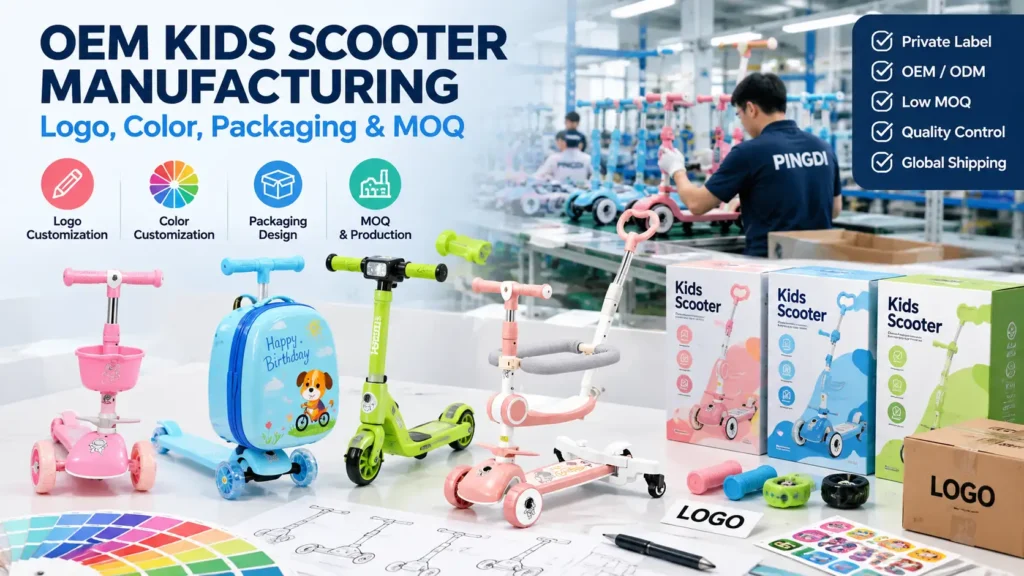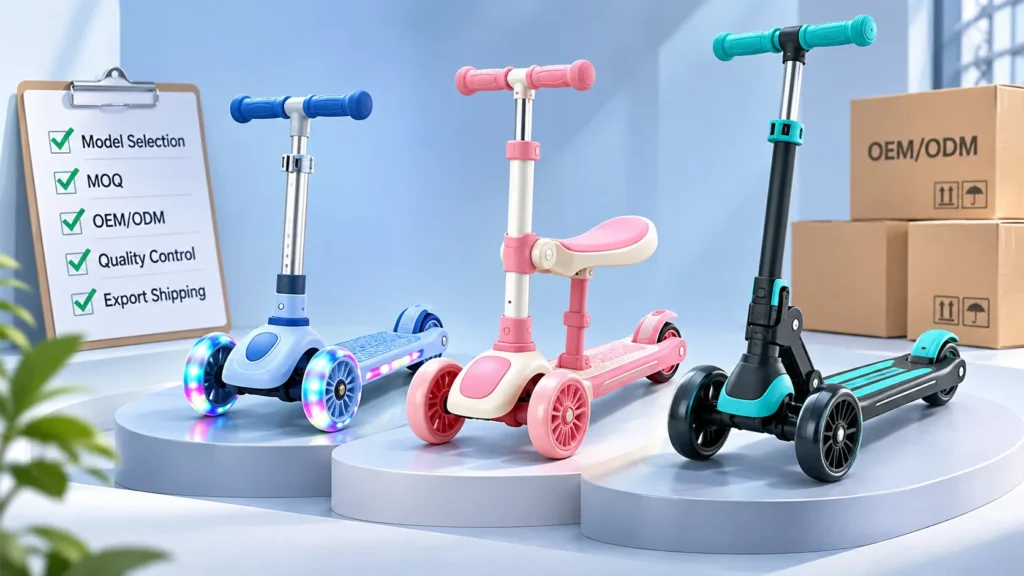
3-Wheel Kids Scooters Wholesale: How to Choose Models, MOQ and OEM Suppliers in China
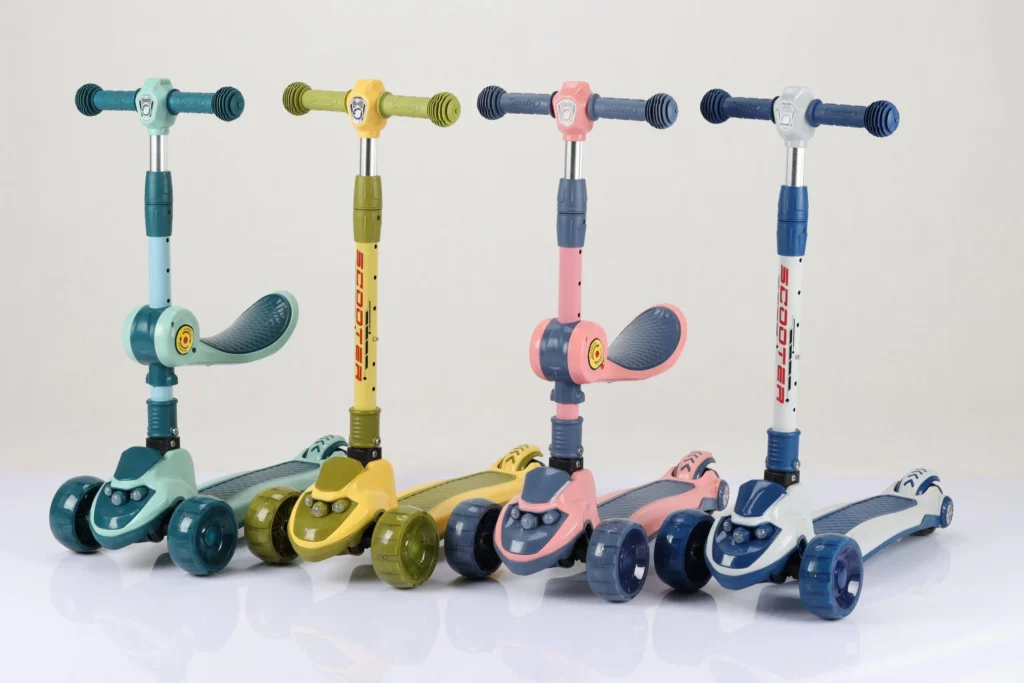
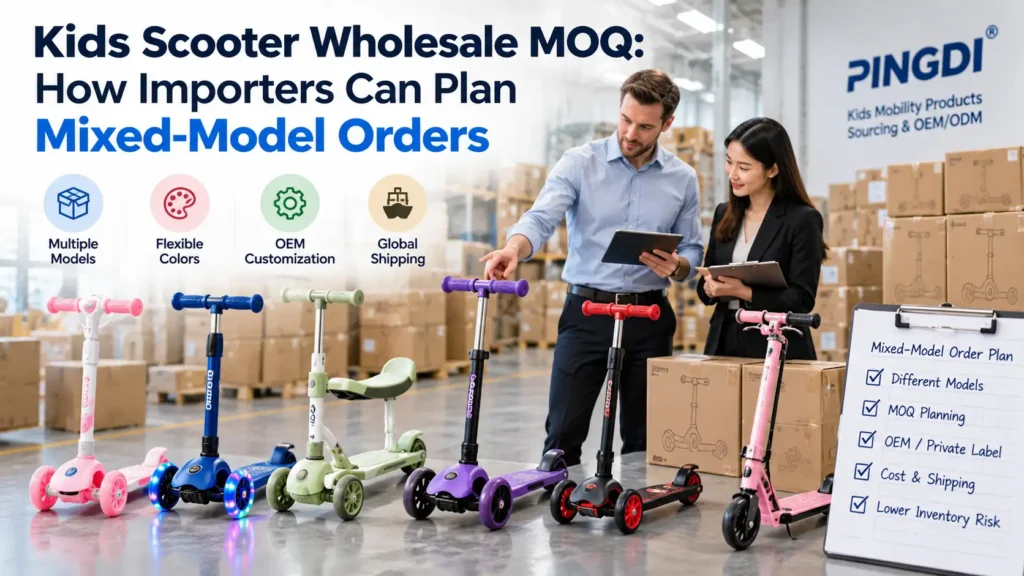
A practical 2026 sourcing guide for importers, distributors, wholesalers and private-label children’s product brands. Buying 3-wheel kids scooters wholesale from China involves more than finding an attractive product design or negotiating the lowest unit price. For international importers and distributors, the right scooter must match the target retail market, age grading, product specifications, safety requirements, packaging expectations and commercial budget. Two scooters may look nearly identical in supplier catalogs but differ significantly in steering mechanisms, wheel materials, deck construction, load ratings and quality consistency. Minimum order quantities also vary according to customization requirements. A standard model may be available with a relatively small order, while a private-label project involving new colors, packaging or tooling may require a larger commitment. This guide explains how to select 3-wheel kids scooter models, compare wholesale prices, negotiate MOQ, evaluate OEM suppliers and manage quality inspections before shipping. It also explains how PINGDI supports international B2B buyers through manufacturing partner coordination, OEM/ODM project management and export sourcing services. 1. Why 3-Wheel Kids Scooters Are an Important Wholesale Category Three-wheel kids scooters are commonly positioned within the toddler and young children’s outdoor activity market. Many models feature two front wheels and one rear wheel, although other wheel arrangements are available. Depending on the design, features may include: For importers, these features provide different retail positioning opportunities. A basic model may suit price-sensitive wholesale channels, while a premium folding scooter with upgraded wheels and finishes may be more appropriate for a branded retail collection. However, higher specifications do not automatically create better margins. Buyers must compare purchasing costs, packaging volume, expected retail prices and product quality. 2. Main Types of 3-Wheel Kids Scooters for Wholesale Before requesting quotations, importers should determine which product category fits their customers. Standard 3-Wheel Toddler Scooters These are generally straightforward designs with three wheels, a standing deck and a handlebar. Potential advantages include simpler product construction and fewer optional components. They may suit distributors looking for entry-level products, provided the specific model meets the required safety and quality standards. Lean-to-Steer Kids Scooters Lean-to-steer models use a steering mechanism that responds to the rider’s body movement and handlebar input. Buyers should verify steering resistance, turning behavior, component durability and the stability of the approved design. The steering system should be evaluated as part of the complete scooter, not as an isolated feature. Adjustable-Handlebar Scooters Adjustable handlebars allow a model to accommodate different rider heights within the manufacturer’s intended user range. Important checks include: A supplier should provide the actual handlebar height range rather than simply advertising “adjustable height.” Folding 3-Wheel Kids Scooters Folding designs can improve storage and transport convenience. However, the folding joint introduces additional mechanical components. Importers should verify the locking system, assembly instructions and applicable safety testing. 3-in-1 Convertible Kids Scooters Some models combine a standing scooter with a removable seat or push-handle arrangement. These products can support differentiated retail positioning, but buyers must carefully assess the intended modes of use. Each configuration may introduce different mechanical, stability and regulatory considerations. The manufacturer should provide documentation covering the configurations being sold. 3. Compare Scooter Materials Before Choosing a Supplier Material selection affects weight, appearance, manufacturing consistency and cost. Common Component Materials Component Common Options Buyer Consideration Deck PP or reinforced plastic Strength and durability Handlebar tube Aluminum alloy or steel Weight and corrosion resistance Wheels PU or other polymers Wear and rolling performance Steering components Polymer and metal assemblies Precision and durability Grips TPR or other elastomers Grip and material compliance Bearings Model-specific bearings Rolling performance Decorative parts Molded plastic Fit and appearance Material names alone are not proof of quality. For example, two scooters may both use PP decks but differ in structural design, wall thickness, reinforcement and manufacturing consistency. Buyers should request the approved material specifications and relevant test information. 4. Which Technical Specifications Should Importers Compare? A professional 3-wheel kids scooter supplier in China should provide a complete specification sheet. The following table illustrates how buyers can compare potential products. Illustrative Scooter Specification Comparison Specification Basic Model Adjustable Model Premium Folding Model Wheel arrangement 2 front + 1 rear 2 front + 1 rear 2 front + 1 rear Steering Model-specific Lean-to-steer Lean-to-steer Handlebar Fixed Adjustable Adjustable Front wheels Example: 100 mm Example: 120 mm Example: 120 mm Wheel material PU PU PU Deck Plastic Reinforced plastic Reinforced plastic Folding No Optional Yes LED wheels Optional Optional Optional Branding Logo option Logo and color Broader OEM options These are illustrative product configurations, not specifications for actual PINGDI models. Importers should also request verified product weight, rated load, age grading, unfolded dimensions, folded dimensions and carton measurements. Important Technical Questions Before placing an order, ask: 5. How to Choose the Right Models for Your Market Different importers have different retail requirements. A distributor supplying discount stores may prioritize straightforward designs, controlled purchasing costs and standard packaging. A private-label brand may place greater importance on appearance, product differentiation, consistent components and retail-ready packaging. An online retailer may focus on carton dimensions, assembly instructions, product photographs and return rates. Example Product Selection Matrix Buyer Type Suggested Evaluation Focus General wholesaler Price, availability, quality Toy distributor Product range and compliance Private-label brand OEM options and consistency Online retailer Packaging, instructions, returns Retail chain Documentation and repeatability The final selection should depend on verified local demand, retailer requirements and applicable product regulations. Avoid selecting a product solely because a supplier describes it as a bestseller. 6. What Is the Typical MOQ for 3-Wheel Kids Scooters? Kids scooter wholesale MOQ is one of the most important commercial questions. There is no universal MOQ across Chinese suppliers. Public B2B listings show substantial variation. Some suppliers advertise standard scooter models at approximately 50–100 units, while other listings specify 200, 300, 500 or more units. More specialized or customized products may have higher minimum quantities. These are public listing examples, not confirmed transaction volumes or PINGDI quotations. Why MOQ Changes MOQ depends on several factors: Existing model availability: Standard colors and packaging may reduce customization
3-Wheel Kids Scooters Wholesale: How to Choose Models, MOQ and OEM Suppliers in China Leer más »