khqanjdj123@gmail.com

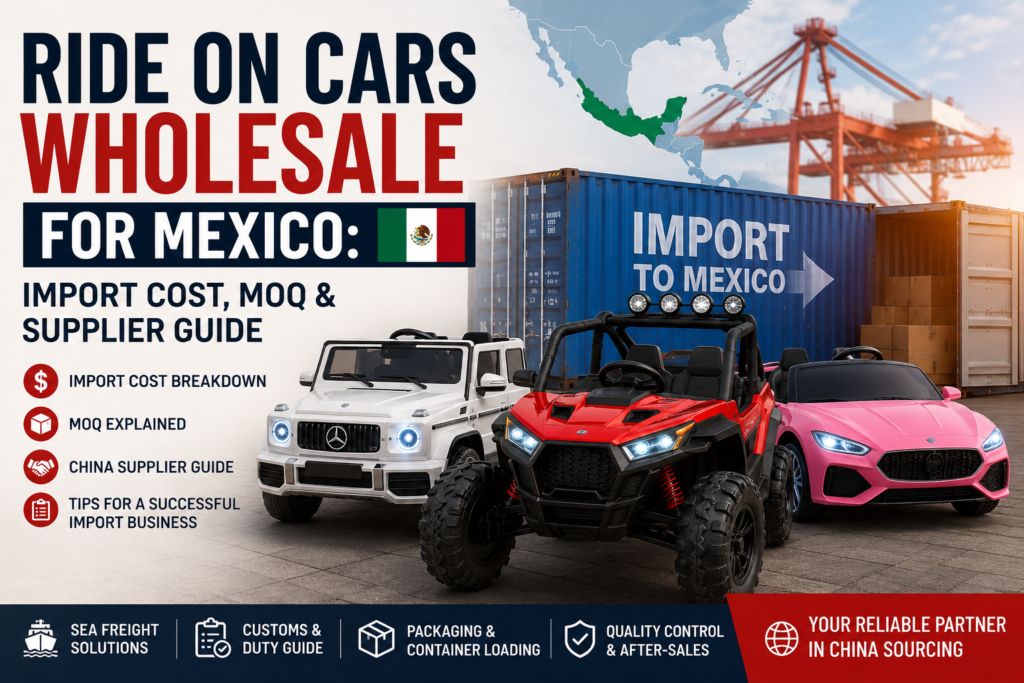
Ride On Cars Wholesale for Mexico: Import Cost, MOQ & Supplier Guide

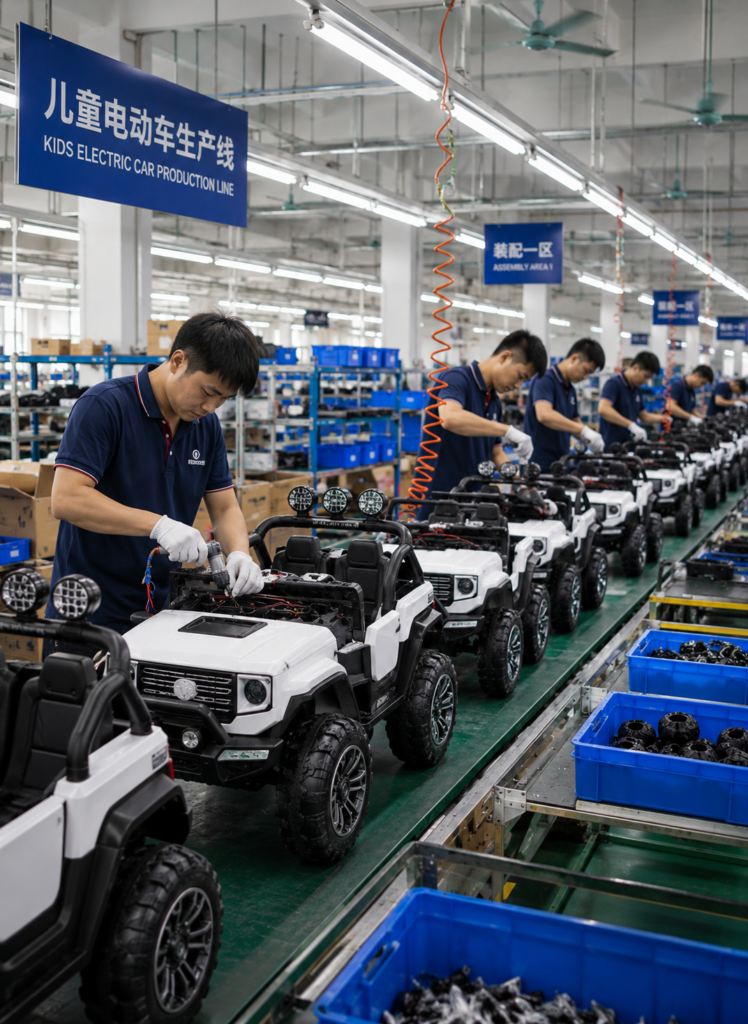
For importers, wholesalers, distributors, and toy retailers exploring ride on cars wholesale Mexico sourcing opportunities, China offers a mature supply chain for 12V and 24V kids electric vehicles. However, successful sourcing requires more than comparing factory prices. Buyers should also evaluate MOQ, product quality, container loading, OEM options, customs requirements, spare parts, and after-sales support. However, successful ride on cars wholesale for Mexico sourcing is about much more than finding the lowest factory price. Importers need to consider product selection, 12V vs. 24V specifications, MOQ, OEM customization, carton size, container loading, quality control, customs classification, labeling, spare parts, and after-sales support. A ride-on car that costs USD 5 less at the factory may actually be more expensive after shipping if its packaging takes up significantly more container space. Likewise, an attractive model can become a poor purchasing decision if replacement batteries, motors, gearboxes, remote controls, or other spare parts are difficult to obtain. This guide explains the key factors Mexican buyers should evaluate when sourcing kids electric ride on cars wholesale from China. Why Source Ride On Cars Wholesale for Mexico from China? China has a mature manufacturing and supply-chain ecosystem for children’s electric vehicles. Importers can source a wide range of products, including: For Mexican wholesalers, one advantage is the ability to build several price levels within the same product category. Entry-level 12V models can target price-sensitive customers, while larger 24V two-seater UTVs and electric trucks can target buyers looking for premium products. In addition, experienced Chinese suppliers can support OEM projects involving logos, colors, packaging, Spanish manuals, accessories, batteries, motors, wheels, and other specifications. Popular Ride On Cars for the Mexico Market Product selection should start with the target retail price and customer group rather than appearance alone. 1. 12V Ride On Cars 12V ride on cars wholesale remains an important sourcing category for importers. Typical features include: These products can provide a practical balance between purchase price, carton size, features, and retail positioning. For first-time importers, mature 12V models may also reduce product-development risk. 2. 24V Ride On Cars 24V ride on cars wholesale has become an important product segment for buyers seeking larger, more powerful, and higher-value models. Common configurations include: However, importers should evaluate more than motor power. A larger 24V model normally requires a larger carton. Therefore, its freight cost per unit can be substantially higher. Mexican importers should also verify customs classification carefully. Mexico’s official tariff descriptions specifically identify certain rechargeable-battery children’s ride-on toys of up to 12V under tariff fraction 9503.00.02, while other toy classifications also exist. Do not automatically assume a 24V product uses exactly the same classification as a 12V model. 3. Two-Seater Ride On Cars Two seater ride on cars are useful for wholesalers building a premium range. Popular configurations include: Their higher perceived value can support stronger retail pricing. However, larger dimensions mean importers must pay close attention to carton CBM. 4. Kids Electric UTVs and Off-Road Models Another category worth considering is the kids electric UTV. UTV and off-road styling provides strong visual differentiation for online advertising, social media, showrooms, and retail stores. Useful purchasing keywords in this category include: 24V kids UTV wholesale, two seater ride on UTV, off road ride on car wholesale, kids electric truck wholesale, and 4×4 ride on car supplier China. For wholesalers, the important question is not simply which model looks best. The better question is which model provides the right combination of purchase cost, shipping efficiency, reliability, and achievable retail price. Ride On Cars Wholesale Mexico: MOQ Explained MOQ is one of the first issues buyers discuss with a ride on car supplier in China. However, there is no universal MOQ. The minimum order quantity depends on: A supplier may accept a relatively small quantity of an existing model using standard colors and packaging. In contrast, private-label projects may require higher quantities. For example, customized cartons, special colors, unique stickers, exclusive components, or new molds can increase MOQ. Therefore, Mexican buyers should ask: What is the total order MOQ? What is the MOQ per model? What is the MOQ per color? Can different models be mixed in one container? The final question is especially important. A mixed-container strategy can allow distributors to test several products without holding excessive inventory of one model. How Much Does It Cost to Import Ride On Cars from China to Mexico? Factory price is only one component of the real purchasing cost. Professional importers should calculate landed cost. A simplified formula is: Product Cost + Packaging + China Inland Charges + Export Charges + Freight + Insurance + Import Charges + Taxes + Customs Clearance + Mexico Inland Transportation = Landed Cost Therefore, comparing two suppliers only by FOB price can be misleading. Consider this example. Supplier A offers a model at: USD 92 FOB Supplier B offers a similar model at: USD 96 FOB Supplier A initially looks cheaper. However, Supplier B may use better-designed packaging that allows significantly more units to fit into a 40HQ container. Once freight is divided across more units, Supplier B could have a similar—or even lower—landed cost. This is why professional ride on car importers should request carton information before confirming an order. Container Loading Is Critical for Ride On Cars Ride-on cars are bulky products. For this category, CBM can sometimes matter almost as much as FOB price. Before placing an order, request: Then calculate: Ocean Freight ÷ Number of Units = Approximate Freight Cost per Unit This makes supplier comparison much more accurate. For example, two electric UTVs may have similar factory prices. However, if one carton is 15% smaller, the shipping economics can be very different. Therefore, packaging optimization should be part of product sourcing—not something considered only after production. Import Classification for Ride On Cars in Mexico Importers should confirm the applicable Mexican tariff classification before placing a large order. Mexico’s trade rules identify tariff fraction 9503.00.02 for certain wheeled toys designed for children to ride, including products powered by rechargeable batteries up

Ride On Cars Wholesale for Mexico: Import Cost, MOQ & Supplier Guide Read More »
1764c0fd 1095 4055 b1b0 5825f2014a89

Ride On Cars Wholesale for Mexico: Import Cost, MOQ & Supplier Guide

For importers, wholesalers, toy distributors, e-commerce sellers, and retail chains looking for ride on cars wholesale Mexico sourcing opportunities, China offers a mature supply chain with a wide range of 12V and 24V kids electric vehicles. However, successful importing requires more than finding a low factory price. However, finding a low factory price is only one part of a successful import project. Buyers also need to understand MOQ, product specifications, customs classification, shipping costs, Mexican labeling requirements, quality control, and the reliability of the Chinese supplier. If you are planning to purchase ride on cars wholesale for Mexico, this guide explains the most important factors to consider before placing your first order. Why Source Ride On Cars from China for Mexico? China has one of the world’s most developed supply chains for children’s electric ride-on toys. A professional ride on car manufacturer in China can typically provide a broad range of products, including: For Mexican importers, this creates several advantages. First, buyers can build a complete product range using different price levels. A distributor may source entry-level 12V products for mass-market retailers while also offering larger 24V models for customers seeking premium products. Second, Chinese suppliers usually provide extensive OEM options. Importers can customize colors, logos, packaging, accessories, motors, batteries, wheels, and other specifications. Finally, China’s mature children’s-product supply chain makes it possible to consolidate different products into a broader purchasing program. Popular Ride On Cars for the Mexico Market Choosing the right models is more important than simply choosing the cheapest models. 1. 12V Ride On Cars The 12V ride on car remains an important wholesale category because it can offer a practical balance between cost, size, performance, and retail pricing. Common features include: For a first-time importer, established 12V models can be easier to test than highly customized products. 2. 24V Ride On Cars Larger 24V ride on cars are attractive to buyers looking for higher-performance or premium products. They may feature: However, buyers should not assume that a 24V product has exactly the same Mexican customs classification or compliance path as a 12V model. Mexico’s tariff schedules specifically identify certain rechargeable-battery ride-on toys of up to 12V under 9503.00.02, so products outside that description should be classified according to their actual specifications with a Mexican customs broker. 3. Two-Seater Ride On Cars Two-seater ride on cars can help distributors create a higher-value product range. However, bigger products also mean larger cartons. Therefore, importers should compare not only FOB price but also CBM and container capacity. 4. Kids Electric UTVs Off-road and UTV-inspired designs are another important category for wholesalers. Typical purchasing terms include: These models can provide stronger visual differentiation for online stores and retail displays. What Is the MOQ for Ride On Cars Wholesale? One of the first questions Mexican importers ask is: “What is your MOQ?” There is no universal MOQ. The actual ride on car MOQ depends on: For an existing model with standard colors and packaging, some suppliers may accept relatively small trial orders. However, deeper OEM projects normally require higher quantities. For example, custom cartons, unique body colors, special accessories, exclusive graphics, or new molds can increase the practical MOQ. Therefore, buyers should ask two questions: What is the total MOQ? and What is the MOQ per model or color? This distinction is important when building a mixed container. Should New Mexican Importers Start with a Small Order? For a new distributor, buying the maximum possible quantity is not always the best strategy. A first order should test: For example, instead of investing heavily in one model, an importer may consider a carefully planned mixed order if the supplier’s MOQ allows it. After collecting real sales data, the buyer can increase quantities for the strongest products. This approach can reduce inventory risk while building a more data-driven purchasing strategy. Understanding the Real Import Cost Many buyers compare suppliers using only FOB price. That can be a serious mistake. The real cost of importing kids electric cars from China to Mexico can include: Product Cost + Packaging + Inland Logistics + Export Charges + Ocean Freight + Insurance + Import Duties + Taxes + Customs Clearance + Local Transportation + Warehousing Therefore: Landed Cost = Total Cost to Bring the Product into Your Warehouse This number is much more useful than factory price alone. For example, Supplier A may offer a cheaper ride-on car but use a much larger carton. Supplier B may charge slightly more per unit but achieve significantly better container utilization. Depending on freight rates, Supplier B could ultimately provide the lower landed cost. HS Code and Customs Classification in Mexico This is an area where importers should be particularly careful. Mexico’s foreign-trade rules list tariff fraction 9503.00.02 for certain wheeled toys designed to be ridden by children, including products powered by rechargeable batteries of up to 12V. Other wheeled toys can fall under different tariff classifications depending on their characteristics. Therefore, do not simply copy an HS code from: Instead, send your Mexican customs broker: and ask the broker to confirm the applicable Mexican tariff fraction and current import requirements before shipment. This is especially important for 24V ride on cars. Mexican Labeling Requirements for Ride On Toys Mexico’s NOM-015-SCFI-2007 establishes commercial information requirements for toys sold in Mexico. Depending on the product, required information includes items such as the generic product name, quantity information, country of origin, importer details, recommended age, and battery or power information. Mandatory label information is generally required in Spanish under the standard. For battery-powered ride-on toys, importers should prepare labels before mass shipment rather than discovering problems after the container reaches Mexico. A professional supplier should be able to support customized: The Mexican importer and its customs/compliance professionals should approve the final labeling before shipment. Safety and Compliance Electric ride-on toys combine mechanical, electrical, and battery-related risks. Therefore, buyers should evaluate: Mexico has developed toy-safety requirements referencing international mechanical, flammability, and electrical toy standards; electrical toys are specifically addressed in the relevant

Ride On Cars Wholesale for Mexico: Import Cost, MOQ & Supplier Guide Read More »
Baby & Kids Mobility Products Supplier China – Strollers, Ride-On Cars, Balance Bikes & Scooters

Baby Stroller MOQ Explained: How Many Units Should Importers Order from China?

For importers, wholesalers, distributors, Amazon sellers, and baby product brands sourcing from China, understanding baby stroller MOQ is one of the first steps before placing an order. MOQ can directly affect your unit price, customization options, packaging costs, inventory planning, and overall sourcing strategy. “What is your MOQ for baby strollers?” The answer, however, is rarely as simple as 100, 300, or 500 units. The baby stroller MOQ (Minimum Order Quantity) depends on the stroller model, customization requirements, packaging, materials, colors, production process, and whether you are purchasing an existing design or developing a completely new OEM product. For a new importer, ordering too many units can create inventory and cash-flow pressure. Ordering too few may result in higher unit costs, limited customization options, and inefficient international shipping. So, how many baby strollers should you actually order from China? This guide explains how stroller MOQ works, why Chinese manufacturers establish minimum order quantities, and how importers can determine the right order volume for different stages of their business. What Does MOQ Mean in Baby Stroller Manufacturing? MOQ stands for Minimum Order Quantity. It represents the smallest production quantity that a manufacturer is normally willing to accept for a particular product or production configuration. For example, a baby stroller manufacturer in China might offer: These numbers are examples rather than universal rules. The actual MOQ varies significantly between suppliers and projects. The important point for importers is that MOQ is not an arbitrary number created by the factory. It is usually determined by manufacturing economics. Factories must consider raw material purchasing, production line setup, fabric cutting, frame painting, logo printing, packaging production, labor, quality inspection, and many other fixed costs before mass production begins. When the production quantity becomes too small, these costs must be distributed across fewer units, significantly increasing the unit price. Why Do Baby Stroller Manufacturers Have MOQs? Understanding why factories establish MOQs can help importers negotiate more effectively. 1. Raw Material Minimum Orders A baby stroller contains dozens or even hundreds of individual components. Typical materials and parts include: Suppliers of these components often have their own minimum production quantities. For example, if you request a unique fabric color, the textile supplier may require hundreds of meters of fabric. Similarly, a customized powder-coating color may require the production line to prepare a dedicated batch. Therefore, the stroller manufacturer’s MOQ is partly determined by its upstream supply chain. 2. Production Line Setup Costs Before mass production begins, the factory must prepare equipment, workers, materials, tools, and inspection standards. Production setup may involve: Whether the factory produces 50 strollers or 500 strollers, many setup processes remain the same. Larger production runs therefore reduce the setup cost per unit. 3. Custom Packaging MOQ Packaging is frequently overlooked by first-time importers. If you require a private label baby stroller, you may also need: Packaging factories normally have their own MOQs. For example, the stroller factory may technically be able to manufacture 100 units, but the carton supplier may require 500 customized cartons. This can increase the practical MOQ for the entire project. 4. Custom Colors Increase MOQ Color customization is one of the most common OEM requests. Buyers often ask: “Can I order 100 black, 100 beige, 100 green, and 100 pink?” From a marketing perspective, this makes sense because importers want to test several colors. From a manufacturing perspective, however, every additional color increases complexity. The factory may need to change: Therefore, you should always ask your supplier about both: Total MOQ and MOQ per color. A supplier might accept 500 units total but require at least 100 units per color. What Is a Typical Baby Stroller MOQ in China? There is no universal MOQ, but buyers can use the following ranges as a general reference. 50–100 Units: Small Trial Orders This quantity may be possible when: This approach can be useful for: However, the unit price is usually higher. 100–300 Units: Market Testing Orders For many new buyers, this is a more practical starting range. It provides enough inventory to test: while limiting inventory risk. A 100–300-unit order may also provide better pricing than extremely small orders. For a new baby stroller wholesale business, this can be a reasonable way to validate the market before committing to a larger container order. 300–500 Units: Typical Commercial Orders Once a buyer has validated the product, 300–500 units often provide a better balance between: At this volume, factories may offer greater flexibility for: This is often where a project begins to move from simple wholesale purchasing toward genuine OEM baby stroller manufacturing. 500–1,000 Units: Established Importers and Brands For experienced importers with established distribution channels, larger production runs can significantly improve purchasing economics. Potential advantages include: This volume is particularly suitable for wholesalers, national distributors, retail chains, and growing private-label brands. 1,000+ Units: Large OEM and Private Label Projects Large-volume projects typically offer the greatest customization flexibility. An established buyer may request: For significant OEM projects, manufacturers may also work with customers on exclusive molds and new product development. However, larger orders require more careful inventory planning. A lower factory price does not automatically mean a better business decision if the products remain in your warehouse for twelve months. Standard Product vs OEM Baby Stroller MOQ This distinction is extremely important. Standard Baby Stroller If you select an existing factory model with standard materials and colors, the manufacturer can often offer a lower MOQ. Why? Because the factory already has: This is the lowest-risk option for new importers. OEM Baby Stroller OEM projects involve customization. Typical OEM requests include: The more customization required, the higher the MOQ may become. ODM / New Product Development A completely new stroller is different again. If the project requires: the manufacturer must invest substantially more time and resources before production begins. Therefore, ODM projects usually require higher development budgets and production commitments than purchasing existing models. How Many Baby Strollers Should a New Importer Order? The correct answer depends on your sales capability rather than

Baby Stroller MOQ Explained: How Many Units Should Importers Order from China? Read More »

76cfaa75 f23a 4fa6 826b fa5504033db9

How to Import Kids Electric Ride-On Cars from China: A Complete Guide for European Distributors (2026)

Introduction: Why European Distributors Are Sourcing Kids Electric Ride-On Cars from China For European toy distributors, importers, wholesalers and private-label brands, kids electric ride-on cars represent an attractive product category because they combine strong visual appeal with multiple price points, battery configurations, body styles and opportunities for OEM customization.kids ride-on cars A European distributor sourcing from China can choose from products such as electric sports cars, SUVs, off-road jeeps, pickup trucks, electric go-karts, tractors and themed ride-on vehicles. The same basic product category can therefore be developed into a much wider retail collection instead of being treated as a single SKU. But importing a battery-powered children’s vehicle into Europe is very different from purchasing a simple plastic toy. A kids electric ride-on car may involve mechanical safety, electrical safety, chemical restrictions, batteries, charging systems, product markings, instructions, traceability information and importer responsibilities. European buyers therefore need to evaluate much more than the FOB price. As of 2026, toys placed on the EU market are still principally governed by the Toy Safety Directive 2009/48/EC. The newer Toy Safety Regulation (EU) 2025/2509 will replace that framework after its transition period; the existing Directive remains applicable until 31 July 2030. For distributors, this means the correct sourcing strategy in 2026 is: Product Selection → Supplier Verification → Compliance Review → Sample Testing → OEM Confirmation → Mass Production → Quality Control → Shipping → Customs Clearance → EU Market Distribution. This guide explains each stage. 1. Start by Defining the Exact Ride-On Car You Want to Import One of the biggest sourcing mistakes European buyers make is beginning with a request such as: “Please send me your best kids electric cars.” That request is too broad. Before contacting a kids electric car manufacturer in China, define the commercial specification of your product. A European distributor should first determine whether the target product is a 12V or 24V ride-on car, whether it is single-seat or two-seater, whether the intended retail positioning is entry-level or premium, whether parental remote control is required and whether features such as LED lights, music, USB, Bluetooth or EVA wheels are commercially necessary. Product style is equally important. A distributor serving traditional toy retailers may prefer mainstream SUVs and sports cars. An online brand may benefit from more differentiated designs such as electric go-karts, off-road vehicles, police cars or tractors. The more precisely you define the target market, the easier it becomes to compare Chinese suppliers accurately. For example, instead of asking: “What is your ride-on car price?” a professional sourcing request should look more like: “We are looking for a 24V two-seater kids electric ride-on SUV for the German and French markets. Target order quantity is 500 units. Please quote the available motor configurations, carton dimensions, 40HQ loading quantity, OEM packaging options and available compliance documentation.” That type of RFQ immediately separates casual sellers from experienced B2B suppliers. 2. Find the Right Kids Electric Ride-On Car Supplier in China Price should never be the only criterion when selecting an electric ride-on car supplier China. The supplier you choose affects not only the product but also your compliance risk, shipment schedule, replacement-part availability and long-term reputation in Europe. A serious supplier should be able to explain the complete product specification rather than simply send pictures. For each model, request the battery specification, motor power, number of motors, maximum load, recommended age, speed range, charging information, wheel material, product dimensions, carton size, net and gross weight, available OEM options and existing test documentation. You should also understand exactly who controls production. For a private-label project, the most important issue is not whether the company describes itself as a “factory” or “trading company.” What matters is whether your supplier can reliably control engineering, component purchasing, assembly, inspection, testing, packaging and production scheduling. For European distributors, supply-chain control is more valuable than a supplier simply presenting a low quotation. 3. Order and Evaluate Samples Before Mass Production Never evaluate a battery-powered ride-on car only from photos or videos. Before placing a large order, order a representative sample with the configuration that you actually intend to sell. A proper sample review should evaluate physical construction, steering, wheels, electrical functions, charger, battery installation, switches, wiring, seat, safety restraint where applicable, assembly process, labels, instructions, packaging and general workmanship. The sample should also be used as the reference for compliance testing and later production approval. This is particularly important when an OEM project includes modifications. Changing a battery, motor, charger, wiring system, plastic component, wheel, electronics module or other safety-relevant component after testing may affect the validity of your existing compliance evidence. Under the EU toy framework, manufacturers must consider changes in toy design, characteristics and applicable standards when maintaining conformity. For this reason, your approved sample and your mass-production specification should match. 4. Understand EU Toy Safety Requirements Before Placing the Order This is one of the most important sections for any European distributor. In the EU, toys must meet applicable safety requirements before they are placed on the market. Toys sold in the EU must carry CE marking, which indicates the manufacturer’s declaration that the product complies with applicable EU safety requirements. The European Commission states that manufacturers are responsible for carrying out the conformity assessment, preparing the technical file, issuing the EU Declaration of Conformity and affixing the CE marking. For an electric ride-on toy, the compliance review commonly involves both physical/mechanical toy safety and electrical toy safety. The exact standards and versions applicable to your specific model must be verified at the time the product is placed on the market. 5. EN 71 Requirements for Kids Electric Ride-On Cars European buyers frequently search for: EN71 certified ride on cars but the correct sourcing question is more detailed. Do not simply ask: “Do you have EN71?” Instead ask: “Which applicable EN 71 parts and versions were tested, for this exact model and configuration, and can you provide the full test report?” The EU publishes references to harmonised toy standards that can give

How to Import Kids Electric Ride-On Cars from China: A Complete Guide for European Distributors (2026) Read More »

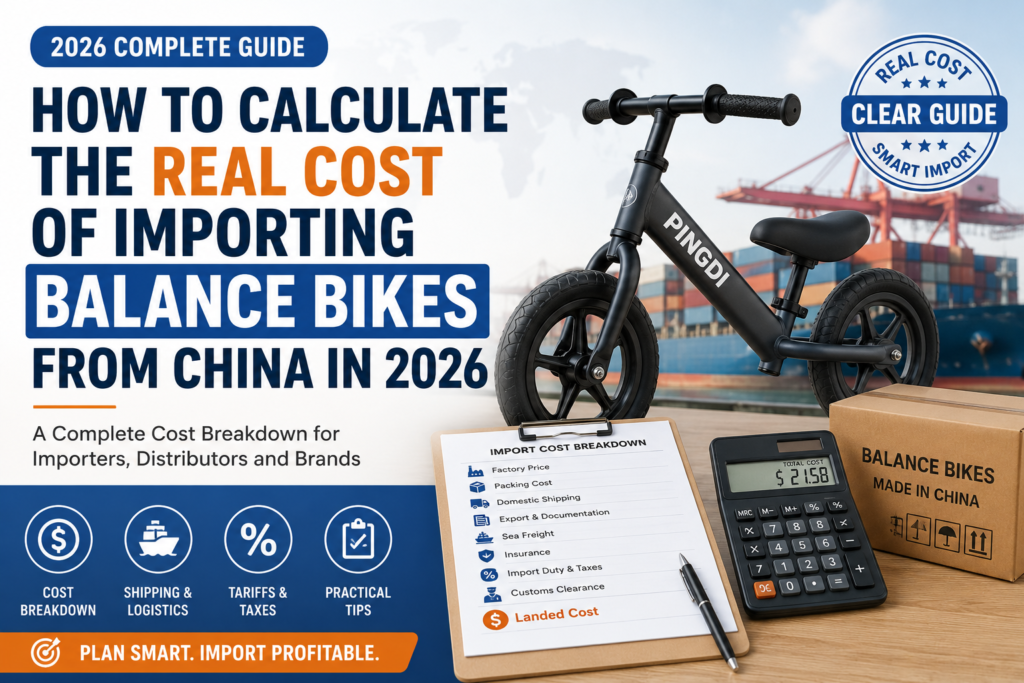
How to Calculate the Real Cost of Importing Balance Bikes from China in 2026 (Complete Guide)

Introduction: Understanding the Real Cost Behind Balance Bike Imports For global children’s product brands, importing balance bikes from China has become an attractive business opportunity. Balance bikes are popular because they help young children develop: The market demand continues to grow, especially in: For importers, distributors, and private-label brands, sourcing from China provides advantages including: However, many first-time buyers make a common mistake: They only calculate the factory quotation. The real import cost includes much more: Understanding the complete cost structure helps buyers: This guide explains how to calculate the real cost of importing balance bikes from China in 2026. 1. Main Factors That Affect Balance Bike Import Cost The final cost of importing balance bikes depends on several factors. 1. Balance Bike Factory Price The factory price is the biggest part of your total investment. The price depends on: A professional Balance Bike Manufacturer China usually offers different product ranges. Entry-Level Balance Bikes Features: Suitable for: Advantages: Mid-Range Balance Bikes Features: Suitable for: This segment is popular because it balances: Premium Balance Bikes Features: Suitable for: Higher product cost can create: 2. Material Selection and Its Impact on Cost Material choice directly affects balance bike pricing. Steel Frame Balance Bike Advantages: Disadvantages: Aluminum Balance Bike Advantages: Suitable for: Wooden Balance Bike Advantages: Suitable for: Wheel Type Cost Difference Common options: EVA Wheels Advantages: Rubber Wheels Advantages: The choice affects: 3. MOQ and Its Influence on Import Cost MOQ means: Minimum Order Quantity It is one of the most important factors for new buyers. Standard Balance Bike MOQ For existing models: Advantages: Suitable for: OEM Customized Balance Bike MOQ Customized products usually require higher MOQ. Reasons: However, OEM provides: 4. OEM Customization Costs Many global buyers choose: Private Label Balance Bike Manufacturing because they want to build their own brands. Customization includes: Logo Customization Options: Color Customization Including: Packaging Customization Including: Product Modification Advanced OEM projects may include: A professional OEM Balance Bike Supplier can help control customization costs. 5. Shipping Cost From China Shipping is another important part of import cost. Balance bikes are larger products, so most buyers choose sea freight. Sea Freight Advantages: Options: Full Container Load (FCL) Suitable for: Less Container Load (LCL) Suitable for: Air Freight Suitable for: Disadvantage: Higher transportation cost. 6. Import Duties and Customs Clearance Cost Many new importers underestimate customs-related expenses. The total landed cost may include: Before importing, buyers should confirm: 7. Packaging Cost Packaging affects both: Professional suppliers optimize packaging to reduce: Packaging options: Standard Export Packaging Suitable for: Retail Packaging Suitable for: Includes: 8. Sample Cost Before Mass Production Professional buyers should always test samples. Sample costs may include: Although samples increase initial expense, they reduce risks. Samples help confirm: 9. How to Calculate Total Landed Cost The correct formula: Product Cost Customization Cost Packaging Cost Shipping Cost Import Duties Customs Fees Local Transportation = Total Landed Cost Example: Product price: $25/unit Packaging: $1/unit Shipping: $5/unit Import fees: $2/unit Final landed cost: $33/unit Only after calculating landed cost can buyers determine real profit. 10. How to Improve Balance Bike Profit Margin Successful brands focus on more than reducing purchase price. Choose the Right Supplier A reliable factory provides: Optimize Product Design Reduce unnecessary costs through: Build a Private Label Brand Private label products usually achieve better margins because they provide: Why Choose Pingdi Factory for Balance Bike Manufacturing? Guangzhou Pingdi Technology specializes in OEM and ODM children’s mobility products. Our products include: Our Manufacturing Advantages OEM Balance Bike Solutions Supporting: Professional Production Management Including: Global Export Experience Supporting buyers from: FAQ Q1: How much does it cost to import balance bikes from China? The cost depends on: Q2: What is the MOQ for OEM balance bikes? MOQ depends on: Q3: Is importing balance bikes from China profitable? Yes. Many brands source from China because of competitive production costs and flexible OEM options. Q4: How do I find a reliable balance bike supplier? Check: Q5: Can I create my own balance bike brand? Yes. Many Chinese manufacturers support: Conclusion: Calculate Before You Import Importing balance bikes from China can create strong business opportunities, but successful buyers must understand the complete cost structure. The real cost is not only the factory price. Professional importers consider: Choosing an experienced: OEM Balance Bike Manufacturer China helps brands reduce sourcing risks and build competitive children’s product businesses. At Pingdi Factory, we help global buyers develop reliable balance bikes through professional OEM and ODM manufacturing solutions.

How to Calculate the Real Cost of Importing Balance Bikes from China in 2026 (Complete Guide) Read More »

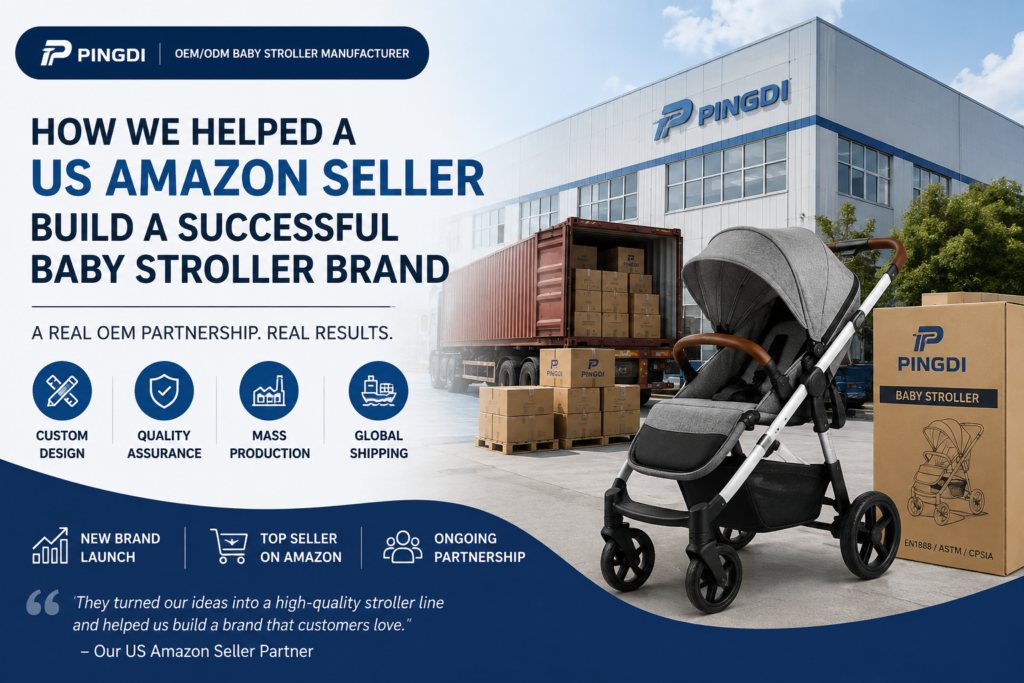
How We Helped a US Amazon Seller Build a Successful Baby Stroller Brand with Our OEM Solution

A Successful Private Label Baby Stroller Manufacturing Case Study Introduction: From Amazon Seller to Baby Product Brand Owner Launching a successful baby product brand on Amazon requires much more than finding a popular product. Many Amazon sellers start their journey by searching for products with market potential, but long-term success depends on: For baby products, especially baby strollers, customers expect: A generic product with no differentiation is becoming increasingly difficult to compete with. Baby stroller suppliers targeting the U.S. market should also understand applicable product safety and compliance requirements published by the U.S. Consumer Product Safety Commission (CPSC) Successful Amazon sellers are moving toward: Private Label + OEM Manufacturing This approach allows sellers to: This case study explains how Pingdi Factory helped a US Amazon seller transform an initial product idea into a successful baby stroller brand through our OEM manufacturing solution. Project Overview Customer Background The customer was a US-based Amazon seller specializing in baby and children’s products. Before cooperation, the customer mainly sold existing products through Amazon. However, they faced several challenges: Challenge 1: Strong Market Competition The customer found that many baby stroller listings on Amazon looked similar. Problems included: The customer wanted a product that could stand out. Challenge 2: Lack of Manufacturing Experience Although the customer understood Amazon operations, they did not have experience with: They needed a reliable: OEM Baby Stroller Manufacturer China to support the entire process. Challenge 3: Building a Long-Term Brand The customer did not want to simply sell another product. Their goal was: Project Requirements Product Category Private Label Baby Stroller Market United States Amazon Marketplace Cooperation Model OEM Manufacturing Main Requirements: Step 1: Understanding the Amazon Market Positioning Before product development, our team worked with the customer to understand: This step was important because successful Amazon products are created based on market demand. We analyzed: Competitor Weaknesses Common problems found in existing listings: Customer Expectations US parents usually focus on: Based on these insights, we helped the customer define the product direction. Step 2: OEM Baby Stroller Product Development As an experienced: Custom Baby Stroller Manufacturer China we supported the customer from concept to finished product. Product Design Optimization Our engineering team helped improve: Frame Structure Focused on: Folding System Optimized: Seat Design Improved: Step 3: Creating a Private Label Baby Stroller Brand A successful Amazon product requires strong branding. We supported: Logo Customization Including: Packaging Design Including: Product Appearance Including: The goal was not only to manufacture a stroller, but to help create a recognizable baby product brand. Step 4: Prototype Development and Testing Before mass production, we developed samples for evaluation. The process included: First Prototype Checked: Customer Testing The customer evaluated: Improvement Stage Based on feedback, we optimized: Step 5: Manufacturing Process After sample approval, production started. The manufacturing process included: Material Inspection Checking: Frame Production Including: Sewing Process Producing: Assembly Including: Step 6: Quality Control for Amazon Sales For Amazon sellers, product reviews directly influence sales. A few negative reviews can affect: Therefore, quality control was critical. Our QC System Included: IQC Incoming material inspection IPQC Production process inspection FQC Finished product testing OQC Shipment inspection Product Testing Focus We checked: Step 7: Supporting Amazon Brand Growth Our support did not stop at production. We helped the customer prepare: This allowed the Amazon seller to focus on: Project Results Through cooperation with Pingdi Factory, the customer successfully achieved: A Customized Baby Stroller Brand Including: ✔ Private label product ✔ Custom design ✔ Brand packaging ✔ Stable manufacturing supply Business Benefits The customer gained: Why Amazon Sellers Need an OEM Manufacturing Partner Many Amazon sellers understand: But manufacturing is a completely different field. A professional OEM partner helps solve: Product Development Problems Turning ideas into real products. Manufacturing Problems Ensuring: Supply Chain Problems Managing: Why Choose Pingdi Factory? Guangzhou Pingdi Technology specializes in OEM and ODM children’s products. Our products include: Our OEM Advantages 1. Product Development Support Helping brands with: 2. Private Label Manufacturing Supporting: 3. Quality Management Including: 4. Global Export Experience Supporting buyers from: FAQ Q1: Can you help Amazon sellers create private label baby strollers? Yes. We support Amazon sellers with: Q2: What is the MOQ for private label baby strollers? MOQ depends on: Q3: Can I customize an existing stroller design? Yes. We support: Q4: Do you support Amazon FBA sellers? Yes. We can support Amazon sellers with manufacturing, packaging, and export preparation. Q5: Why choose OEM instead of buying existing products? OEM allows brands to: Conclusion: Building Brands Through Professional OEM Manufacturing Building a successful Amazon baby product brand requires more than selling products. It requires: Through professional OEM solutions, Pingdi Factory helped a US Amazon seller transform from a product seller into a baby stroller brand owner. For Amazon sellers, private label brands, and baby product companies looking for a reliable: OEM Baby Stroller Manufacturer China Pingdi Factory provides complete manufacturing solutions from concept development to mass production.

How We Helped a US Amazon Seller Build a Successful Baby Stroller Brand with Our OEM Solution Read More »

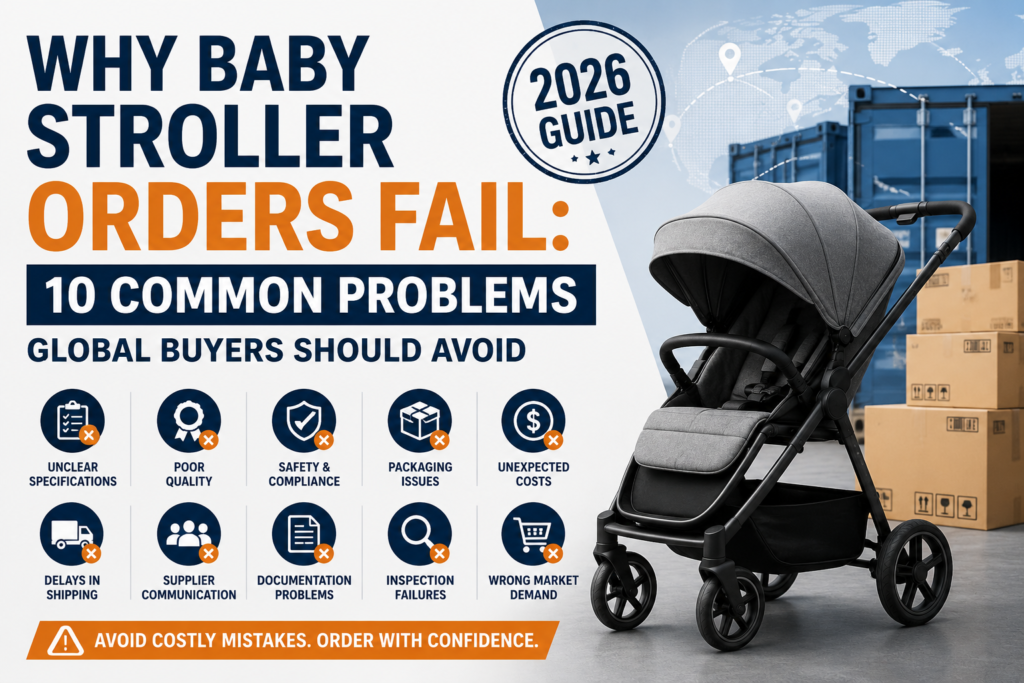
Why Baby Stroller Orders Fail: 10 Common Problems Global Buyers Should Avoid (2026 Guide)

Introduction: Why Successful Baby Stroller Orders Require More Than Finding a Supplier For global baby product buyers, sourcing baby strollers from China creates huge business opportunities. China has developed a complete baby product manufacturing ecosystem, including: This allows international brands, retailers, and distributors to develop competitive products with professional OEM partners. However, not every baby stroller project succeeds. Every year, some importers experience problems such as: The reason is simple: Many buyers focus only on: But successful baby stroller sourcing requires a deeper evaluation of: A failed baby stroller order can damage: This guide explains the 10 most common reasons baby stroller orders fail and how global buyers can avoid these problems. 1. Choosing a Supplier Based Only on Lowest Price The Problem One of the biggest mistakes buyers make is selecting the cheapest quotation. A low price may hide problems such as: A baby stroller is a safety-related product. Reducing cost too aggressively can create: How to Avoid This Problem Professional buyers should evaluate: Factory Capability Check: Quality System Ask: The best supplier is not always the cheapest supplier. The best supplier provides: Reliable quality + Competitive cost + Long-term support 2. Working With a Trading Company Without Knowing It The Problem Some buyers believe they are cooperating directly with a manufacturer but are actually working with a trading company. This can create: How to Avoid This Problem Before cooperation, confirm: Does the Supplier Have: ✔ Production workshop? ✔ Assembly line? ✔ Engineering team? ✔ Quality department? ✔ Product development capability? A professional: OEM Baby Stroller Manufacturer China should be able to show real manufacturing capability. 3. Poor Product Communication Before Production The Problem Many order problems start before manufacturing begins. Common issues: For example: A buyer expects: “premium black stroller” But the factory understands: “standard black stroller” The result can create disagreement after production. How to Avoid This Problem Before production, confirm: Product Specification Sheet Including: Approved Sample The production sample should become: “The standard for mass production” 4. No Professional Product Development Process The Problem Some buyers directly place large orders without proper sample development. This creates risks: How to Avoid This Problem A professional process should include: Step 1: Product discussion ↓ Step 2: Prototype development ↓ Step 3: Sample testing ↓ Step 4: Customer approval ↓ Step 5: Mass production Experienced OEM factories help buyers improve products before investing in large quantities. 5. Ignoring Safety Standards and Certification Requirements The Problem Baby strollers must meet safety requirements in different markets. Ignoring compliance may result in: Important standards may include: Europe USA How to Avoid This Problem Before production, confirm: A professional supplier should understand: Baby stroller safety compliance not only manufacturing. 6. Weak Quality Control During Mass Production The Problem Some buyers only inspect products after production is finished. By then, problems may already exist. Common defects: How to Avoid This Problem A reliable factory should have: IQC Incoming Material Inspection ↓ IPQC Production Process Inspection ↓ FQC Finished Product Inspection ↓ OQC Shipment Inspection Quality should be controlled throughout production. 7. No Factory Audit Before Large Orders The Problem Some buyers place large orders without visiting or auditing the factory. This creates risks: How to Avoid This Problem Before cooperation, check: Factory Audit Checklist Production Management Experience 8. Unrealistic Delivery Time Expectations The Problem Some buyers expect production faster than realistic. Baby stroller production involves: Rushing production may create: How to Avoid This Problem Create realistic schedules: Sample: Design confirmation ↓ Sample approval ↓ Material preparation ↓ Mass production ↓ QC inspection ↓ Shipment Good planning prevents delays. 9. Poor Communication Between Buyer and Factory The Problem International cooperation requires effective communication. Problems occur when: How to Avoid This Problem Choose suppliers who provide: A reliable supplier should act as: Your manufacturing partner not only a product seller. 10. No Long-Term Supplier Relationship Strategy The Problem Some buyers treat suppliers as one-time vendors. This prevents: How to Avoid This Problem Successful brands build long-term partnerships. Benefits include: How Pingdi Factory Helps Global Buyers Avoid Order Failures Guangzhou Pingdi Technology specializes in OEM and ODM children’s products. Our products include: Our Manufacturing Approach We focus on: 1. Professional Product Development Supporting: 2. Strict Quality Control Including: 3. OEM & ODM Experience Supporting: 4. International Buyer Support Helping customers with: FAQ Q1: Why do baby stroller orders fail? Common reasons include: Q2: How can I choose a reliable baby stroller supplier? Evaluate: Q3: Should I order samples before bulk production? Yes. Sample approval reduces production risks and ensures expectations are aligned. Q4: What should I check before importing baby strollers from China? Check: Q5: What makes a good OEM baby stroller manufacturer? A good manufacturer provides: Conclusion: Avoiding Failure Starts With Choosing the Right Manufacturing Partner A successful baby stroller order is not created by choosing the lowest price. It is created through: Global buyers who understand these risks can avoid expensive mistakes and build stronger baby product businesses. Choosing an experienced: OEM Baby Stroller Manufacturer China helps brands reduce sourcing risks and create reliable products for global markets. At Pingdi Factory, we help international buyers transform ideas into successful baby product projects through professional manufacturing, quality management, and OEM/ODM solutions.

Why Baby Stroller Orders Fail: 10 Common Problems Global Buyers Should Avoid (2026 Guide) Read More »

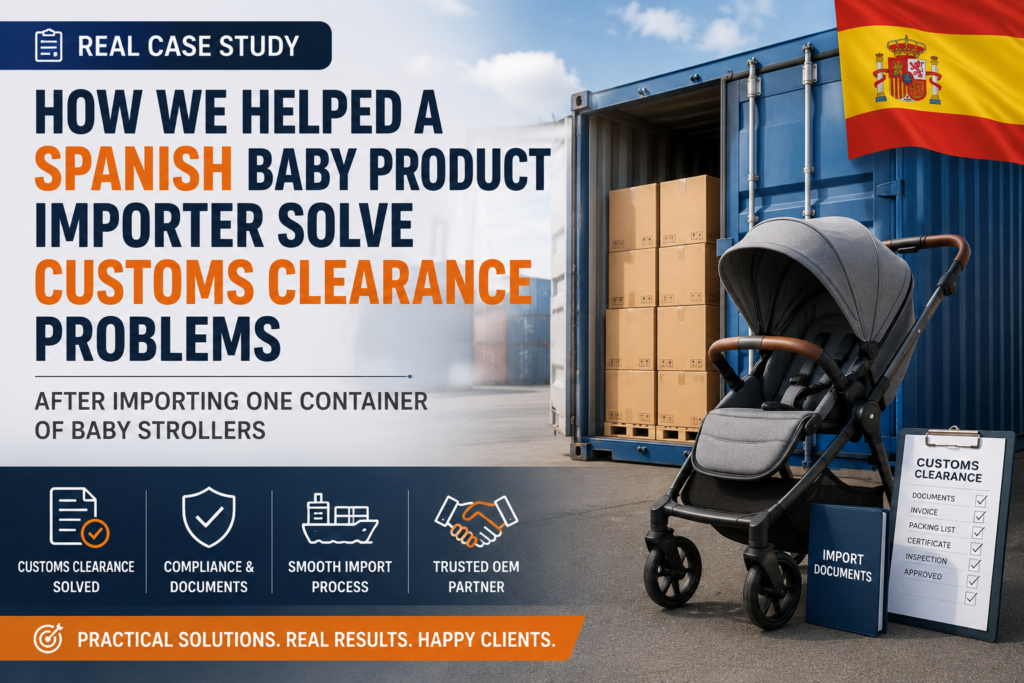
How We Helped a Spanish Baby Product Importer Solve Customs Clearance Problems After Importing One Container of Baby Strollers

A Real OEM Baby Stroller Import Support Case Study Introduction: Successful Importing Requires More Than Manufacturing For international baby product importers, purchasing from China is not only about finding a factory with competitive prices. A successful import project requires support throughout the entire supply chain: Many buyers think the supplier’s responsibility ends when products leave the factory. However, experienced manufacturers understand that international cooperation requires long-term support. Especially for first-time importers, challenges may appear during: This case study explains how Pingdi Factory helped a Spanish baby product importer solve customs clearance problems after importing one container of baby strollers from China. Through effective communication, document support, and supply chain coordination, we helped the customer successfully complete the import process and receive the products. Project Overview Customer Background The customer was a Spanish baby product importer specializing in: The company was expanding its product range and looking for a reliable: Baby Stroller Supplier China for long-term cooperation. After evaluating several suppliers, the customer selected Pingdi Factory because of: Project Requirements Product Customized Baby Strollers Quantity One Container Shipment Market Spain / European Union Cooperation Model OEM Manufacturing Customer Requirements The customer needed: Step 1: Product Development and Production Preparation Before production, our team communicated with the customer regarding: As a professional: OEM Baby Stroller Manufacturer China we understand that European buyers usually have higher requirements regarding: Product Customization The project included: Custom Colors The customer selected colors according to their market positioning. Brand Customization Including: Product Details Our engineering team optimized: Step 2: Strict Quality Control Before Shipment Before shipping, quality control was performed throughout production. Our QC process included: IQC – Incoming Quality Control Inspection of: IPQC – Production Inspection Monitoring: FQC – Final Product Inspection Checking: OQC – Shipment Inspection Before loading: Confirmed: Step 3: Container Shipment Preparation After production completion, the products were prepared for export. The shipment included: Our logistics team worked with the customer to confirm: The container was successfully shipped from China to Spain. Step 4: Customs Clearance Problem Appeared After the container arrived in Spain, the customer encountered unexpected customs clearance difficulties. The main problems included: Problem 1: Document Verification Issues The customs broker requested additional confirmation regarding: Problem 2: Import Process Delay Because of incomplete communication between different parties, the clearance process became slower than expected. The customer was concerned about: Problem 3: Lack of Previous Import Experience Although the customer had experience selling baby products, they had limited experience handling complex import situations. They needed support from a supplier who understood international trade procedures. Step 5: How Pingdi Factory Helped Solve the Problem Instead of simply saying: “Products have already shipped.” Our team actively participated in solving the problem. Solution 1: Document Review and Confirmation We reviewed all available export documents: Including: We communicated with the customer and logistics partners to ensure information consistency. Solution 2: Supplier Communication Support Our team maintained communication between: We helped clarify: This reduced misunderstandings during the clearance process. Solution 3: Providing Product Information Support For baby products, customs and import authorities may require clear product information. We provided: Helping the customer complete the required procedures. Solution 4: Continuous Follow-Up During the process, we kept communication active. We updated the customer regarding: This helped reduce customer anxiety during the delay. Step 6: Successful Customs Clearance and Delivery After cooperation between all parties, the customs clearance issue was successfully resolved. The customer finally received: The customer appreciated our support because we provided assistance beyond normal manufacturing responsibilities. Project Results Through this cooperation: Customer Achieved: ✔ Successful import completion ✔ Reduced clearance risks ✔ Received products on schedule ✔ Established confidence in the supplier Pingdi Factory Provided: ✔ OEM manufacturing ✔ Export support ✔ Documentation assistance ✔ Supply chain coordination ✔ Long-term partnership service Why International Buyers Need More Than a Baby Stroller Factory When choosing a supplier, many buyers only compare: However, professional importers understand that a reliable partner should provide: Manufacturing Capability Ability to produce stable quality products. Export Experience Understanding: Problem-Solving Ability Supporting customers when unexpected situations happen. Why Choose Pingdi Factory? Guangzhou Pingdi Technology provides professional OEM and ODM solutions for global children’s product buyers. Our products include: Our Advantages 1. OEM Manufacturing Experience Supporting: 2. Quality Management System Including: 3. International Customer Support Serving customers from: 4. Long-Term Partnership Approach We believe successful cooperation continues after shipment. Our goal is helping customers build reliable supply chains. FAQ Q1: Can a Chinese baby stroller supplier help with customs clearance problems? Yes. Experienced suppliers can support customers with documents, product information, and communication with logistics partners. Q2: What documents are needed when importing baby strollers from China? Common documents include: Q3: How can I reduce customs problems when importing baby products? Prepare documents early and work with experienced suppliers and logistics partners. Q4: Why choose a manufacturer with export experience? Because experienced manufacturers understand: Q5: Does Pingdi support European baby product importers? Yes. We support global customers with OEM manufacturing and export cooperation. Conclusion: A Reliable Supplier Supports Your Business Beyond Production Importing baby strollers from China is a complete process involving: The best suppliers are not only factories. They are partners who help customers solve problems and grow their businesses. Through professional OEM manufacturing and international support, Pingdi Factory helped a Spanish baby product importer successfully solve customs clearance problems after importing one container of baby strollers from China. If you are looking for a reliable: Baby Stroller Manufacturer China with manufacturing capability and export experience, Pingdi Factory is ready to support your next project.

How We Helped a Spanish Baby Product Importer Solve Customs Clearance Problems After Importing One Container of Baby Strollers Read More »

How We Helped a US Baby Product Brand Successfully Import 500 Customized Baby Strollers from China

A Complete OEM Baby Stroller Manufacturing Case Study Introduction: Turning a Baby Product Idea into a Successful Import Project For many overseas baby product brands, finding the right manufacturing partner in China is one of the biggest challenges. A successful baby stroller project requires much more than competitive pricing. It requires: In 2026, more US baby product brands are looking for reliable OEM baby stroller manufacturers in China to create customized products that match their market positioning. This case study explains how Pingdi Factory helped a US baby product brand successfully develop and import 500 customized baby strollers from China, from the initial product concept to final shipment. Through professional OEM manufacturing, quality management, and supply chain coordination, we helped the customer transform an idea into a market-ready product. Project Overview Customer Background Our customer was a US-based baby product company focusing on: Before contacting Pingdi Factory, the customer had several challenges: Challenge 1: They needed a customized baby stroller design that could differentiate their brand from competitors. Challenge 2: They wanted a reliable China baby stroller supplier with OEM experience. Challenge 3: They needed confidence that the products could meet US market requirements. Challenge 4: They wanted a manageable first order quantity to test market response. Project Requirements The customer needed: Product Type Customized baby stroller Order Quantity 500 units Market United States Cooperation Model OEM private label manufacturing Requirements: Step 1: Understanding the Customer’s Brand Positioning Before production started, our team worked closely with the customer to understand: This step was important because different markets require different product strategies. For the US market, buyers usually focus on: Based on this information, our engineering team provided suggestions regarding: Step 2: Customized Baby Stroller Product Development As an experienced OEM Baby Stroller Manufacturer China, we understand that customization is not only about adding a logo. A successful OEM project involves: Product Design Optimization Our team helped improve: Material Selection The customer required a balance between: We selected suitable materials for: Frame Fabric Wheels Step 3: Prototype Development and Approval Before mass production, we created prototypes for evaluation. The sample development process included: First Prototype We checked: Customer Feedback The customer reviewed: Final Sample Approval After several improvements, the final sample was confirmed as the production standard. This process helped avoid problems during mass production. Step 4: OEM Manufacturing Process After sample approval, production officially started. The manufacturing process included: Material Preparation Inspection of: Frame Production Including: Fabric Manufacturing Including: Final Assembly Workers assembled: Step 5: Strict Quality Control During Production For baby products, quality control is critical. Our QC system included: IQC — Incoming Quality Control Before production: We inspected: IPQC — Production Inspection During production: We monitored: FQC — Finished Product Inspection Before packaging: Each stroller was checked for: OQC — Shipment Inspection Before shipping: We confirmed: Step 6: Packaging and International Shipping For overseas buyers, packaging quality is also important. The project included: Before shipment, our logistics team coordinated: The products were successfully shipped from China to the United States. Challenges We Solved During the Project Challenge 1: Balancing Customization and Cost The customer wanted a premium appearance but needed competitive pricing. Solution: Our engineering team optimized: Result: A balance between quality and cost was achieved. Challenge 2: Ensuring Product Consistency For brand owners, consistency is critical. Solution: We established: Challenge 3: Communication Across Countries International projects require efficient communication. Solution: We provided: Project Results Through cooperation between the US brand and Pingdi Factory: Successfully completed: 500 Customized Baby Strollers Delivered: ✔ OEM customized products ✔ Brand packaging ✔ Stable product quality ✔ Export-ready shipment The customer gained: Why Global Baby Brands Choose Pingdi Factory Guangzhou Pingdi Technology provides professional OEM and ODM manufacturing solutions for global customers. Our product categories include: Our Advantages 1. OEM Product Development We support: 2. Manufacturing Capability Including: 3. International Export Experience Supporting buyers from: 4. Complete Quality Management From: Raw materials ↓ Production ↓ Inspection ↓ Shipment we control every stage. FAQ Q1: Can you customize baby strollers for US brands? Yes. We support: Q2: What is the MOQ for customized baby strollers? MOQ depends on: Q3: Can you help with product development? Yes. Our engineering team supports: Q4: Do your products meet international safety requirements? We can support customers with testing requirements according to different markets. Q5: How long does a custom baby stroller project take? The timeline depends on: Conclusion: Building Successful Baby Product Brands Through Reliable Manufacturing A successful baby stroller import project requires more than finding a low-cost supplier. It requires a manufacturing partner who understands: Through professional OEM manufacturing capabilities, Pingdi Factory helped a US baby product brand successfully import 500 customized baby strollers from China. We continue helping global brands, importers, and distributors develop reliable children’s products through flexible OEM and ODM solutions. If you are looking for a reliable custom baby stroller manufacturer China, our team is ready to support your next project.

How We Helped a US Baby Product Brand Successfully Import 500 Customized Baby Strollers from China Read More »

OEM vs ODM Balance Bikes: Which Is Better for Your Brand? (2026 Complete Guide)

Introduction: Choosing the Right Manufacturing Model for Your Balance Bike Business The global balance bike market continues to grow as parents increasingly recognize the importance of early balance training before children transition to pedal bicycles. For importers, distributors, retailers, and private-label brands, balance bikes have become one of the fastest-growing children’s mobility products. However, one important question arises before launching a new product line: Should you choose OEM or ODM manufacturing? Many buyers use these terms interchangeably, but they represent two very different business models. Choosing the right manufacturing model affects: Whether you are launching your first balance bike brand or expanding an existing product portfolio, understanding the differences between OEM and ODM can help you reduce sourcing risks and improve your competitive advantage. This guide explains the advantages, disadvantages, and ideal use cases for each manufacturing model, helping you make the best decision for your business. What Is OEM Balance Bike Manufacturing? OEM stands for Original Equipment Manufacturer. In an OEM project, the buyer defines the product specifications while the factory manufactures according to those requirements. Typical OEM customization includes: The buyer owns the brand identity and controls the product specifications. OEM is generally preferred by: Advantages of OEM Balance Bikes Complete Product Differentiation OEM allows brands to build products that competitors cannot easily copy. Instead of selling generic products, you can create: Product differentiation supports stronger pricing power and long-term brand value. Stronger Brand Identity Modern buyers are increasingly influenced by branding. OEM manufacturing allows companies to customize: This creates stronger recognition in both retail stores and online marketplaces. Better Profit Potential Although OEM requires more planning and investment, exclusive products generally provide higher margins because direct price competition is reduced. Challenges of OEM Manufacturing OEM projects also require more preparation. Buyers should expect: For brands focused on long-term growth, these investments are often worthwhile. What Is ODM Balance Bike Manufacturing? ODM stands for Original Design Manufacturer. Under this model, the factory already has an existing balance bike design. The buyer selects a model and customizes elements such as: The manufacturer retains the core product design while providing branding flexibility. ODM is ideal for: Advantages of ODM Balance Bikes Faster Time to Market Since the design already exists, development is much faster. Instead of waiting months for engineering work, buyers can move directly into sampling and production. This is particularly valuable for brands responding to seasonal demand. Lower Development Costs ODM eliminates most engineering and tooling expenses. The buyer only needs to invest in branding and packaging, making it suitable for companies with limited budgets. Proven Product Reliability ODM products are often based on existing production experience. Manufacturers may have already optimized: This reduces technical risks during mass production. OEM vs ODM Balance Bikes: Side-by-Side Comparison Feature OEM ODM Product Design Buyer Factory Brand Identity Fully Customized Customized Branding Development Cost Higher Lower Launch Speed Slower Faster Product Exclusivity High Medium MOQ Usually Higher Usually Lower Engineering Support Extensive Limited Long-Term Brand Value Excellent Good OEM provides greater flexibility and brand ownership, while ODM offers speed and lower investment. Many suppliers support both models so brands can start with ODM and gradually transition to OEM as sales grow. Which Manufacturing Model Is Better for Your Brand? Choose OEM If You: Choose ODM If You: Key Factors Buyers Should Evaluate Regardless of the manufacturing model, evaluate suppliers based on: Manufacturing Capability Review: Engineering Team A capable supplier should provide: Quality Control Professional factories should implement: Certifications Depending on your target market, suppliers should understand requirements such as: Why More Global Brands Choose OEM After Starting with ODM Many successful companies follow a staged approach: Phase 1: Launch with an ODM product to validate demand. Phase 2: Gather customer feedback and identify improvements. Phase 3: Transition to OEM with unique designs and upgraded specifications. This strategy minimizes risk while building a stronger long-term brand. Why Choose Pingdi Factory? Guangzhou Pingdi Technology specializes in OEM and ODM children’s mobility products, including: We provide: OEM Services ODM Solutions Quality Assurance Our goal is to help global brands build reliable, competitive children’s products with efficient manufacturing solutions. Frequently Asked Questions Q1: Is OEM more expensive than ODM? Generally, yes. OEM often involves engineering work, prototype development, and sometimes tooling investment, while ODM uses existing designs and requires lower upfront costs. Q2: Which model is better for new brands? ODM is usually the better starting point because it offers lower risk, faster production, and reduced development costs. Q3: Can I switch from ODM to OEM later? Yes. Many successful brands begin with ODM and transition to OEM after validating market demand and increasing order volume. Q4: Which model offers better profit margins? OEM products typically provide higher long-term margins because they are more differentiated and less vulnerable to direct price competition. Q5: Can one factory provide both OEM and ODM? Yes. Professional manufacturers often support both models, allowing buyers to choose the approach that best fits their budget, timeline, and brand strategy. Conclusion OEM and ODM are both valuable manufacturing models, but the right choice depends on your business goals. If your priority is speed and lower investment, ODM offers an efficient path to market. If your objective is long-term brand differentiation and product ownership, OEM is the better strategy. The most important decision is choosing a manufacturing partner with strong engineering capability, stable quality control, and proven export experience. At Pingdi Factory, we help global importers, distributors, and private-label brands develop high-quality balance bikes through flexible OEM and ODM manufacturing solutions.

OEM vs ODM Balance Bikes: Which Is Better for Your Brand? (2026 Complete Guide) Read More »

Scroll to Top